


Glove Making Machine
Why Choose Us?
Professional team
Zhejiang Deheng Machinery Co., Ltd. is a comprehensive machinery manufacturing enterprise integrating research, development, production and sales. There are more than 80 employees: 8 of them are R&D personnel, 10 are outstanding marketing personnel, and 5 are senior technical personnel.
Technological innovation
Deheng keeps up with the changes in international and domestic market demand, continuously optimizes and innovates product technology, and exclusively customizes and develops machines according to customer needs. Now it has more than 10 patents and product invention patents, and won the national high-tech technology enterprise in 2021.
High quality products
The products produced by Deheng have passed IS0 9001:2015 and EU CE certification. the company has always worked hard towards the goal of continuous research and development of more automated equipment, and repay the support and love of our customers with more high-quality products and services.
Complete range of products
Our main products are focus on disposable apparel making machines: surgical gown production line, face mask production line,shoe cover making machine, head cover making machine, sleeve cover making machine , apron making machine, glove making machine.



Product Categories
Latest Products



What Is Glove Making Machine
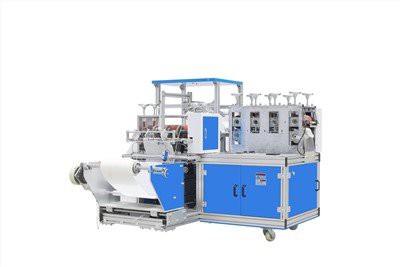
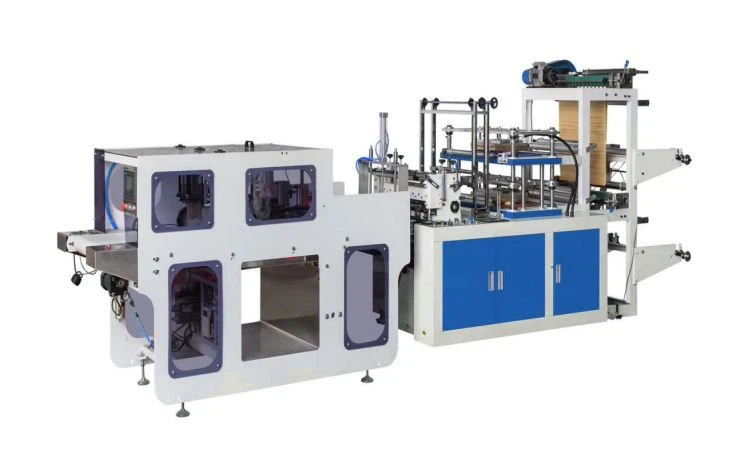
The machine specializes in the production of gloves made of HDPE / LDPE, which are widely used, e.g. hospitals, grocery stores, beauty salons and various production products, etc. Gloves covered by a very good hand against various bacteria and viruses. The machine body is made of steel, which ensures the machine's stability during operation even at maximum speeds. Stations with double unwinding, equipped with clutches for smooth regulation of tension of HDPE belts, two inverters controlling unwinding. In the machine operating the central drive controlling the function of mechanisms responsible for forming the glove. Material feeding is controlled by a stepper motor (servo drive) enabling precise adjustment of HDPE or LDPE tapes to the welding position and application product sorting point. It is possible to make the tool according to an individual design provided by the customer.
It adopts micro computer contact screen to control, three-phase mixing motor to pull material, and producing piece number can be set up freely.
It is suitable for all kinds of moulds, easy operation.
It is suitable for producing HDPE and LDPE film into glove, which widely used in medical, restaurant and food filed for its convenient and healthy.
The size of glove mould can be customized for different standard as well.
Permanent magnet rotor: The rotor is a permanent magnet that aligns with the magnetic field generated by the stator circuit. This solution guarantees a good torque and also a detent torque. This means the motor will resist, even if not very strongly, to a change of position regardless of whether a coil is energized. The drawbacks of this solution is that it has a lower speed and a lower resolution compared to the other types.
Variable reluctance rotor: The rotor is made of an iron core, and has a specific shape that allows it to align with the magnetic field. With this solution it is easier to reach a higher speed and resolution, but the torque it develops is often lower and it has no detent torque.
Hybrid rotor: This kind of rotor has a specific construction, and is a hybrid between permanent magnet and variable reluctance versions.
The rotor has two caps with alternating teeth, and is magnetized axially. This configuration allows the motor to have the advantages of both the permanent magnet and variable reluctance versions, specifically high resolution, speed, and torque. This higher performance requires a more complex construction, and therefore a higher cost. Shows a simplified example of the structure of this motor. When coil A is energized, a tooth of the N-magnetized cap aligns with the S-magnetized tooth of the stator. At the same time, due to the rotor structure, the S-magnetized tooth aligns with the N-magnetized tooth of the stator. The high number of teeth allows the motor to achieve a small step size, down to 0.9°.
It is usually identified by the letters PE. Very stable chemically, it is an excellent insulator for films and bags that come into contact with food.
There are two types of polyethylene disposable gloves, depending on the type of polyethylene used in their production: high-density PE (HDPE) and low-density PE (LDPE).
High density polyethylene (HDPE) is stiffer and harder than low density Polyethylene and is used for gloves that require the lowest costs (see the use at petrol stations or department stores). Low density Polyethylene (LDPE – Low Density PE) is a more flexible material, less rigid and therefore used for gloves which require a greater sensitivity and softer welds as for example in the medical field. The CPE or Cast PE is a formulation of Polyethylenes that, thanks to a calendering, assumes the peculiar roughened finish that allows a higher sensitivity and grip.
The Benefits of PLC Control Panel for Glove Making Machine
Programmable Logic Controllers (PLCs) are widely used in industrial automation systems to control machines and processes. They offer a number of advantages over traditional relay-based control systems, including increased flexibility, reliability, and ease of maintenance.
Flexibility: PLC systems can be programmed to perform a wide range of tasks, from simple on/off control to complex motion control and process automation. They are highly adaptable and can be easily reprogrammed to meet changing requirements.
Improved Reliability: PLCs are designed to operate in harsh industrial environments, with features such as built-in protection against electrical noise and temperature extremes. This makes them more reliable than traditional relay-based control systems.
Faster Response Times: PLCs are capable of responding to inputs and producing outputs much faster than traditional relay-based systems. This is because they use solid-state components and have faster processing speeds.
Greater Accuracy: PLCs are capable of very precise control, which makes them ideal for applications such as process automation and robotics.
Easy to Maintain: PLCs are modular in design, which means that faulty components can be easily replaced without affecting the rest of the system. They also have built-in diagnostic features that make troubleshooting easier.
Scalability: PLC systems can be easily expanded by adding additional modules or controllers, making them highly scalable.
Cost-Effective: While the initial cost of a PLC system may be higher than a traditional relay-based system, they are often more cost-effective in the long run. This is because they require less maintenance and have a longer lifespan.
Improved Safety: PLCs can be programmed to perform safety functions such as emergency shutdowns and machine guarding. This improves overall safety in industrial environments.
Remote Access: Many modern PLC systems can be accessed remotely, which allows for easier monitoring and troubleshooting.
Data Logging: PLC systems can log data on machine performance, which can be used for troubleshooting and predictive maintenance. This helps to reduce downtime and improve overall efficiency.
PLC systems offer numerous advantages over traditional relay-based control systems, including flexibility, reliability, ease of maintenance, and improved safety. With their fast response times, precise control, and scalability, they are an essential component of modern industrial automation systems.
Modules of Glove Making Machine
Welding module with a double foil feeding system. Unwinders for two rolls of jumbo HDPE/LDPE film placed in a vertical position, are equipped with couplings for smooth regulation of the HDPE belt tension, double inverters controlling unwinding.
Unwinders for two jumbo rolls of HDPE/LDPE film, set in a vertical position, are equipped with clutches for smooth regulation of the tension of the HDPE tape, and double inverters controlling the unwinding.
Double gloves welding module welding takes place on two sealing matrix which increases efficiency and improves work ergonomics.
Welding takes place on two dies simultaneously, which increases efficiency and improves work ergonomics.
Glove perforation module. This module perforates the gloves in the part of the wrist to make it easier to tear after hanging them on the stand.
This module perforates the gloves at the wrist to make them easier to peel off after hanging them on the stand.
Gloves heating module. The module spot welds gloves in one package (50-100 pieces) so that after opening the package with gloves they were in one position.
The module spot welds the gloves in one package (50-100 pieces each) so that when the package with gloves is opened, they are in one position.
Waste removing module. The foil that remains beyond the outline of the glove after welding is removed in an automatic cycle by special strippers.
After adding the option to the basic equipment of the device, it becomes a fully automatic device (waste removal after welding in an automatic cycle).
Importance of Glove Making Machine Maintenance
Increased efficiency: Well-maintained glove making machines operate more efficiently, leading to higher productivity and lower energy consumption. They also produce more consistent products and create less waste.
Cost savings: Regular maintenance can prevent costly breakdowns and extend the lifespan of equipment, reducing the need for frequent replacements. Unexpected downtime can be effectively reduced with regular glove making machine maintenance.
Safety: Properly maintained glove making machines are less likely to malfunction, reducing the risk of accidents and injuries in the workplace.
Compliance: Many industries have regulations and standards that require equipment to be properly maintained to ensure safety and environmental compliance.
Reduce waste: Effective maintenance practices contribute to sustainability by minimizing waste, reducing energy consumption, and extending the life of valuable equipment assets.
Planning and budgeting: When glove making machine maintenance is performed regularly, organizations can budget for known repairs and downtime, avoiding unexpected expenses and interruptions.
Our Factory
Zhejiang Deheng Machinery Co., Ltd. is a comprehensive machinery manufacturing enterprise integrating research, development, production and sales. It specializes in manufacturing a complete set of automatic disposable plastic non-woven fabric forming equipment.
DeHeng was established in 2019 with a registered capital of 10 million yuan and covers an area of 5,000 square meters. There are more than 80 employees: 8 of them are R&D personnel, 10 are outstanding marketing personnel, and 5 are senior technical personnel.
Our main products are focus on disposable apparel making machines: surgical gown production line, face mask production line,shoe cover making machine, head cover making machine, sleeve cover making machine , apron making machine, glove making machine are all the popular product in the domestic and overseas market.

Our Certificate
Deheng keeps up with the changes in international and domestic market demand, continuously optimizes and innovates product technology, and exclusively customizes and develops machines according to customer needs. Now it has more than 10 patents and product invention patents, and won the national high-tech technology enterprise in 2021. The products produced by Deheng have passed IS0 9001:2015 and EU CE certification; as a gold supplier of Alibaba and Made-in-China.com, it is our consistent aim and goal to continuously export high-quality products and services to the world.


FAQ
We're well-known as one of the leading glove making machine manufacturers and suppliers in China. Please feel free to buy or wholesale high quality glove making machine at competitive price from our factory. Also, customized service is available.
PE Glove Machine, Washing Gloves Machine, Disposable Gloves Machine