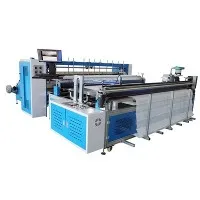
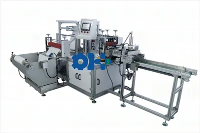
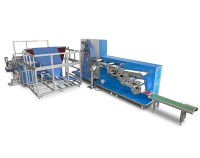
For beginners, an inflatable bottle cap wrapper can be understood as a device specifically designed to automate packaging of bottle caps with flexible components such as gaskets or fleece pads. Its core goal is to ensure "undamaged, airtight and efficient" packaging for bouffant caps. Here's a look at it from a layman's point of view, including "What's a design, how to use it, dos and don'ts, FAQs":
First, let's take a look: What is an inflatable hat wrapper?
Core features: It automatically loads, arranges, seals, inspects and discharges bulk bouffant caps (such as beverage bottle caps with non-slip pads and food bottle lids with gaskets) to well-packaged finishes, ensuring ease of storage and transport while ensuring sealing.
Usage: most commonly used in food, pharmaceutical and daily chemical industries, such as mineral water bottle cap, ointment bottle caps, skin care bottle cap and other soft packaging products. Core Advantages: faster than manual packing (20-300 pieces per minute), uniform packaging quality (eliminating manual sealing issues), automatic sorting of defective items, suitable for mass production.
ii. Beginners: Mastering 5 Basic Steps (Beginner-Friendly Version)
1. Prepare before you start (safety first, don't rush)
First, inspect the machine: check conveyor belt belt, sealed blades and hopper for clutter, loose components and any moving parts that are stuck (for example, avoid piling too many bouffant caps in the hopper to get stuck).
Connect power and air supply: Make sure the wires are not damaged, air pressure is stable (generally, equipment needs 0.3-2MPa) and the power voltage matches the machine's markings (usually 220V or 380V).
Preparation: Pour puffer cap into hopper. Install packaging film (such as plastic film) in the specified position. Threading the film according to machine instructions to ensure that the film is threaded or folded backwards. Safety check: Wear gloves (to avoid scratches) to make sure the the machine's safety guard is fastened and the emergency stop button is working.
2. Set parameters (adjust to product requirements, no guesswork).
The control panel is usually a touch screen for ease of use. Three key parameters need to be adjusted:
Packing speed: Beginners should slow down (say, 20-50 pieces perminute) and then speed up as they become more proficient.
Sealing Temperature: Set the plastic plastic bouffant caps to 60-120°C and the metal caps cover to 100-180°C (too low a temperature will result in poor sealing and too high a temperature will result in burns).
Packing length: Set the packing length according to the size of the film and the bouffant cap to ensure the back cover is completely sealed and won't come loose.
Tip: If you've packed the same product before, simply load the "formula" (the machine can store 10-20 sets of parameters) without having to reset. Machine Debugging (pre-production commissioning)
Dryer test run: do not add fluff cap, press the start button, let the machine idle. Check that the feed quantity of packaging film is uniform, the sealing blade is cut well and the conveyor belt is deviant.
Test kit testing: Place some fluff covers on the machine to verify that the lid can be aligned, that the film is properly packed, that the seal is leaky and that the cut package is free of burrs.
Details: adjust the sorting mechanism in the hopper if the cover is bent; raise the temperature or slow down slightly if the seal leaks; adjust the height of the blade holder if the cover is cut (make sure the blade is cut in the center of the package).
4. Production runs (watch the hat, don't get distracted)
Batch Feeding: add fluff caps to the hopper continuously (making sure they are not cut off or overfilled). The machine will automatically load, sort, package, and discharge the cap. Real-time monitoring: focus on three key points: 1. Check that the bouffant caps is jammed (if it is, press the emergency stop button, clean and then reopen); 2. Check that the inflator cover is smooth and fastened (to prevent leakage or burnout); and 3. Check that the finished product is damaged (for example, if the cover is deformed by pressure).
4. Spot check of finished products: Check every 10-20 units to see if the seal is good (for example, screw the seal onto the bottle to see if there is a leak) and if the packaging is neat. If something goes wrong, it should be shut down immediately to make adjustments.
V. Close and clean (don't leave the machine unattended after use, it needs repair).
Downtime: When all the expansion valves in the machine are packed and drained, press the downtime button to turn off the power and air supply.
Thoroughly clean: Wipe the body with a soft cloth and blow away the contents of the hopper and conveyor belt with compressed air. If there is any remaining packaging film on the sealing blade, remove it with a wire brush coated with silicone lubricant (don't scratch it too hard as it will damage the blade). Simple check: Check that moving parts (such as gears and belts) are loose to ensure the machine opens immediately before next use.
III. Importance: Safety and Operational Taboos for new users
Do not place your hands or tools in the machine's working area (such as under a hopper or near a sealed blade). Even if the machine stops working, turn off the power before cleaning.
Always press the emergency stop button when adjusting parameters or removing jammed material to prevent the machine from accidentally restarting.
Do not modify the safety settings (such as shields and alarms) of the machine at will. Report any problems in a timely manner and do not use the machine at will.
If packaging film is made of flammable material, keep it away from hot areas. Keep the area around the machine free of clutter and ensure proper ventilation.
IV. INTRODUCTION FAQ: How can new users solve these problems?
Frequently asked questions are most likely to lead to simple solutions
Buffy cap is stuck or piled in the hopper. Too many covers in the hopper or incorrect adjustment of sorting mechanism. Reduce the number of hopper covers, adjust the separation mechanism angle, ensure uniform feed.
Bad seal or leak. Too low temperature or insufficient the sealing pressure. Increase the sealing temperature slightly (5-10C at a time) and check the air pressure.
The packaging film has deviation or wrinkle. The packing membrane is not centered or the tension adjustment is not correct. Adjust film roll and film tension knob.
Knives is cutting through the bouffant caps. The knife holder is too high or too low, or the feeder is out of sync with the tool. Adjust the height of the rack so that the cutter cuts into the packing center; synchronize the feeder with the cutter in accordance with the manual.
Machines will alert or fail to start. Insufficient material, insufficient air pressure or incorrect parameter setting. Add more bouffant caps or packaging film, check air pressure, restore default parameters, or call previously qualified formulas.
Abstracts
The core logic of the bouffant cap packaging machine is to "automate"loading-sorting-packaging-from sealing to unpacking, and beginners need not worry. Just follow the steps, adjust parameters, carefully monitor the machine, and clean thoroughly. Try it a few times, and you'll become proficient. Remember the key principles of "safety first, slow start, fast start" and stop as soon as things go wrong. Slowly, you will master packaging technology, improve packaging efficiency!
Dec 01, 2025
Bouffant Cap Packing Machines Explained For Beginners
Send Inquiry
Product Categories
Latest Products