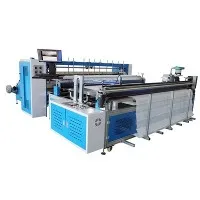
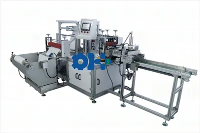
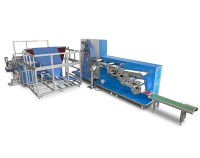
The maintenance points of surgical gown-making machines cover daily maintenance, regular inspections, professional overhauls, personnel training, and safety management, as follows:
Daily maintenance:
Surface cleaning: First cut off the power supply, wipe the dust on the surface of the machine with a non-linting cloth, and then wipe the machine with a damp soft cloth. Spray equipment is not allowed to clean it, and liquid is not allowed to penetrate into the equipment. When cleaning the touch screen, please wipe it with a damp cloth to avoid scratches or abrasions, and do not add any cleaning solvents.
Component inspection: Check the equipment and accessory connection lines to ensure good contact; check and ensure that the vents of all parts of the equipment are not blocked.
Disinfection: All parts that may or must come into direct or indirect contact with the patient are wiped and disinfected with alcohol.
Function detection: After the equipment is started normally, check whether the equipment function is normal. If there is any abnormality, contact the maintenance personnel in time.
Regular inspection:
Appearance inspection: Check whether the buttons, switches, connectors, and sockets of the instrument are loose or misaligned; whether the plugs and sockets are oxidized, rusted, or poorly contacted; whether the power cord is aged; whether the heat dissipation and exhaust are normal; and whether the various grounding connections and pipe connections are good.
Cleaning and maintenance: Clean the surface and internal electrical and mechanical parts of the instrument, including cleaning the filter and related pipes, cleaning the plugs and sockets of the instrument to prevent poor contact, and lubricating the necessary mechanical parts.
Replacement of wearing parts: Replace components that have reached their service life and performance degradation, components that do not meet the requirements, or accessories that are required to be replaced regularly as specified in the instruction manual in a timely manner to prevent possible failures from expanding or causing complete machine failures. In the case of insufficient battery charging, relevant personnel should be urged to charge regularly to eliminate various obvious and potential equipment failures.
Performance test calibration: Test the voltage regulation value of each DC power supply and the voltage value or waveform of the test point in the circuit, and perform necessary calibration and adjustment according to the requirements of the instruction manual to ensure that the technical indicators of the instrument meet the standards and ensure the quality of the instrument in medical diagnosis and treatment.
Safety inspection: Check whether the frame is firm, whether the machine operates normally, whether the connecting parts are loose, falling off, or broken; check whether various leads, plugs, connectors, etc. are damaged, whether the grounding wire is reliable, and whether the grounding resistance and leakage current are within the allowable limit.
Professional maintenance:
Ask professionals to conduct comprehensive inspection and maintenance of the equipment regularly to ensure the performance and safety of the equipment.
Record professional maintenance and maintenance to track the status of the equipment and discover potential problems in time.
Regularly replace the wear parts of the equipment, such as bearings, seals, etc., to prevent equipment damage.
Personnel training:
Operation training: Ensure that the medical staff using the equipment have a full grasp of the use and maintenance knowledge of the equipment to avoid equipment damage or failure due to improper operation.
Maintenance training: Provide professional training for maintenance personnel to make them familiar with the structure, performance, and maintenance methods of the equipment to improve maintenance efficiency and quality.
Safety management:
Protective measures: When repairing the instrument, maintenance personnel should always pay attention to protection work. Whether it is leakage or cross-infection, they should pay attention to protection to avoid unnecessary accidental injuries.
Safety warning: Set safety warning signs in obvious locations on the equipment to remind operators to pay attention to safety issues and operating requirements. Provide clear and concise operating instructions for operators to check at any time to understand the correct operating steps and precautions. For equipment with higher risks, a safe isolation area should be set up around the equipment, and obvious warning signs should be set up to prevent unauthorized personnel from entering.