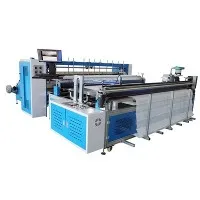
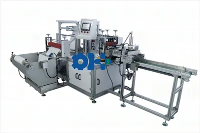
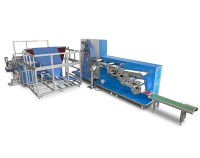
Punch cap packaging machine is a kind of automatic packaging device specially designed for punch cover (such as cosmetics powder caps, food can cover, household product bottle caps, etc.). Its core functions include loading, inspection, assembly (e.g. packing and laminating), sealing and labelling, enabling efficient automated production from individual bottle caps to finished packaging. Widely used in cosmetics, food, pharmaceutical packaging and other industries.
1.Core features of a poncho wrapper
What distinguishes it from traditional bottle cap packaging machines is its adaptability to special products such as fluffy caps:
Targeted Loading Design: fluffy hats usually come in soft materials (such as plush cushions or sponge rings) or special shapes. The machine is equipped with a special vibration plate or robotic arm to prevent deformation during loading and ensure uniform cap placement.
Multi-Process Integration: complete the entire loading → inspection (appearance/dimensions) → pad (e.g. silicone pads or aluminum foil pads) → seal/pressing → labeling → boxing without manual coordination and reduction of production processes. Strict precision control: To meet the sealing requirements of the expansion cover, the device precisely controls the sealing force (to avoid damaging soft components) and assembly position (such as the center the cushioning material) to ensure the sealing effect after packaging.
Available in Multiple Specifications: by quickly replacing the die (e.g., vibrating plate track, capping head), expandable cover of different diameter and height (e.g. 30mm-80mm) ensures a short cover changeover times (usually within 30 minutes). ii. The Complete Workflow of the Fluffy Lid Packaging Machine
The operating logic is "automated flow + step processing," coordinated by a control system (PLC). It is divided into six core steps. Consider the packaging of cosmetic powders and creamy ponchos:
1. Raw Material Loading: Unified derrick Positioning
Large fluffy lids are placed manually on vibrating plates (core loaders). The plate's high-frequency vibrations are sequenced to a pre-set position (on/ off) and then transported via conveyor belt tracks to the next process.
Some irregularly shaped fluffy lids,such as those with handles or grooves, are carried by robotic arms. Visually identify the location of the locator lid so that it is accurately grasped and placed on the conveyor belt to avoid confusion. Quality Inspection: Screening for Defective Products
During transport, the device uses a visual inspection system (camera + image analysis software) that automatically detects the puffy lid's appearance (e.g. scratches, angles), size (caliber deviation) and soft components (e.g. whether the plush cushion has fallen off).
When a defective product is detected, the system triggers a rejection mechanism (such as a blower or push) that pushes the defective product into the bin while qualified product continues to flow.
3. Assembly of Auxiliary Components (optional)
If the expansion cover requires a a sealing gasket (such as a food tank lid), the device automatically cuts the gasket (such as aluminum foil, silicone gasket gasket) using a gasket feeder (such as film, sheet feeder) and applies the gasket precisely to the inside of the lid using a robotic arm or press.
4. For applications that require film coating (such asscratch film), the device is equipped with a film laminating mechanism that heats the film and binds it to the surface of the bubble cover for complete protection. Main package: Sealing/Assembly
If a container (such as a powder can with a puff cap) is required, the device aligns the container (such as a glass bottle) with a qualified puff cap via a synchronous conveyor line. Then the clamping mechanism (or press capping mechanism) is assembled:
Screws: For threaded expansion cover, motor driven the capping head rotates and tightens to a preset torque (to prevent leakage from being too loose or damaged too tight).
Compression: For non-threaded snap-on puff caps, apply downward pressure to the head and press the cap against the container. Pressure can be precisely adjustable (typically 0.5-2 MPa).
If packaging (e.g. bulk sales) only requires the use of puff cap, it can be bagged/ boxed directly without assembly with the container. Labelling and packaging: labelling and storage of Finished Product Marking
Sticker: A labeling machine affixes labels (such as date of production, batch number, brand logo, etc.) to a puff cover or packaging container. Label positioning bias can be controlled to ±1mm.
Packing/Bagging: Qualified finished products (containers with lids or separate inflatable lids) are sent via conveyor belt to a cartoner (self-folding, packing and sealing carton) or a bagger (heat-sealing plastic bags) for final packaging.
6. Delivery and trailing of Finished Product Conveying (Optional)
Packaged finished products (such as cartons and bags) are transported downstream on conveyor belts. Some production lines are equipped with palletizing robots, which can automatically stack finished cartons on top of stacks for easy storage and transportation. III. Main Application Scenarios
The application of lid packaging depends on the application field of the fluffy lid large extent. Core applications include:
Cosmetics: Cream jar lids, loose powder compact lids, blusher case lids and more all require plush or sponge cushions, with an emphasis on appearance and sealing.
Food industry: Nut jar lids, candy jar lids, milk powder caps, etc., require sealing gaskets (to prevent oxidation and dampness) and comply with food contact material standards (such as FDA certification).
Daily Necessities Industry: product bottle, detergent bottle caps, etc. Some have soft, non-slip rings that require precision fitting to prevent them from falling off.
Oct 01, 2025
What Is A Bouffant Cap Packing Machine And How Does It Work
Send Inquiry
Product Categories
Latest Products