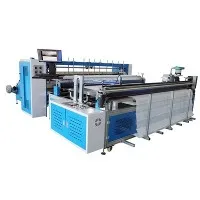
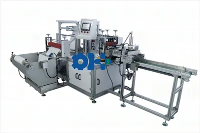
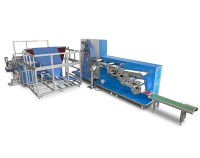
As a common equipment in public places, shoe cover machine is prone to malfunction after long use due to mechanical wear, material fatigue and environmental factors. Based on the analysis of the working principle and common fault mode of its core parts and the experience of industrial equipment maintenance, the key vulnerable components and targeted maintenance solutions are summarized.
I. Analysis of Core Vulnerable Components
Plastic Mechanism Components
Traditional shoe cover machines usually use plastic gears, bearings and connecting rods. These plastic parts are prone to fatigue fracture under pressure of 100 paces. For example, after six months of continuous use of a brand of shoe cover machine, a crack appeared in the root of the plastic gear, causing transmission failure. The malfunction is particularly noticeable in high-humidity environments, where plastic absorbs moisture, reduces toughness and increases brittleness.
Metal roller system
High-end shoe sheathing machine with metal rollers to unfold shoe sheathing. However, after long-term use, due to friction, the surface of the drum will appear scratches, resulting in poor shoe cover delivery. A case study of papermaking equipment shows that after 5 to6 months of use, the surface wear depth of shoe sleeve reaches 0.2mm, causing conveyor belt to skid. Similarly, if the metal rollers of the shoe sheathing machine lacks lubrication, the wear rate will accelerate by more than 30%.
Photoelectric Sensor Module: Smart shoe sleeve machines rely on infrared sensors to detect shoe sleeve positions, but dust accumulation can lead to misreading signals. Laboratory tests show that after 200 hours of operation, the failure rate of the unwashed sensor increases from 2 per cent to 15 per cent, indicating that shoe cover had not been fully deployed or repeatedly removed.
Spring and elastic element: spring in shoe sleeve tensioning mechanism experience decreases elasticity after repeated compression. After one year of use, shoe cover machine free length of the rebound is shortened by 5mm, which results in the shoe not clinging to the foot and increases the risk of slipping.
ii. Lifespan Extension Technology Solutions: Material Upgrades and Structural Optimization: Reinforcement Mechanism: Replace pure plastic with fiberglass reinforced nylon to triple the fatigue life of gears. One company has extended the lifespan of the mechanism from one to 3 years by adding 20% glass fiber to plastic. Cylinder protection: Spray ceramic coating on the surface of the cylinder, hardness up to HV1200, abrasion resistance than the metal substrate up to 5 times. With the introduction of the technology, the roller replacement cycle was extended from 8 months to 2 years.
Sensor Encapsulation: The photoelectric module is sealed in an IP67-rated protective box to prevent dust intrusion. Test data show that the encapsulated sensor has a service life four times that of conventional sensors in a dust environment.
Intelligent Lubrication System
Self-Lubricating Bearings: The roller pivot points adopts oil-soaked bearings, internal micropores continuously release lubricating oil, reducing the number of manual maintenance. The bearing bearing failure rate reduced by 70 70% being used in an airport's shoe cover machine.
Oil Circuit Circulation Design: Aiming at the oil circuit structure of the boot guide beam, lubricating oil channel is designed in the metal rollers to automatically replenish the oil film by gravity. This design reduces roller friction coefficient by 40% and temperature rise by 15°C.
Adaptive Control Algorithm
Pressure regulation: force sensor monitors pedal force in real time and dynamically adjusts motor output power. When the load increases, the smart shoe cover machine automatically extends dispensing time by 0.2 seconds to prevent the mechanism from overloading.
Fault prediction: Based on vibration sensor data, a machine learning model is developed to predict spring fatigue. When the vibration frequency deviates from the reference value by 10%, the system will send an early warning to replace the spring.
Modular maintenance design: Rapid replacement of structures: drum, sensor and other components designed as removable modules, maintenance time reduced from 2 hours to 15 minutes. A brand of shoe cover machine with clasp sensor installation, even non-professionals can be quickly replaced.
Visual interface: A life counter is integrated into the operations panel to display the remaining lifespan of each component in real time. Hospitals used the feature to reduce equipment downtime by 65%.
III. Typical Maintenance case: a shoe cover machine upgrade at a five-star hotel: the original device used a pure plastic mechanism, changing gears every three months on average. Upgraded:
Fiberglass reinforced nylon machinery instead;
increase self-lubricating bearings;
The pressure adjustment module was installed.
The upgraded equipment ran for 18 months without glitches and reduced maintenance costs by 80%. Optimal Design of Shoe Cover for Airport Security Machine
Because of dust accumulation on sensors, the original device experienced 3 to5 false alarms a day. Optimization measures:
Upgraded sensor packaging;
Added automatic air blowers;
Set up an automatic daily cleaning program.
After optimization, the error rate decreased to less than once a week and equipment integrity rate increased to 99.5%.
IV. INTRODUCTION Industry Development Trends
With the popularity of IoT technology, the next generation of shoe cover will feature the following features:
Self-diagnosis function: Analyze running data by edge calculation to identify potential faults in advance;
Material adaptation: automatic adjustment of lubrication frequency and pressure parameters according to the usage environment;
Green design: A biodegradable plastic core that can be composted at the end of its life.
The combination of material innovation, intelligent control and modular design will increase the gap time between shoe sheaths and machine failures from the current 5,000 hours to more than 20,000 hours, providing a more stable and reliable protection solution for public spaces.