Materials science and mechanical engineering work together with precision.
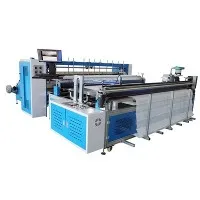
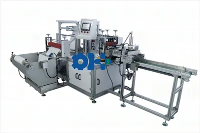
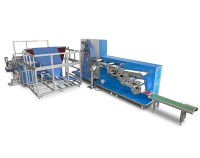
Disposable shoe shoe covers key to isolating pollutants in medical, food processing and laboratory settings. But have you ever wondered how a roll of plastic can be turned into a 3D shoe cover that sticks to the shoe in seconds? Shoebox manufacturing machinery set thermodynamics, material deformation, precision mechanical control technology in one, the realization of seemingly simple, in fact, scientific ingenious transformation. This paper will reveal the core principle of shoe cover manufacturing machinery through three main steps: material pretreatment, thermal molding and 3D packaging.
I. Material Pretreatment: From ``roll "to ``film to be processed '', the first step in shoe cover manufacturing is to ensure that the plastic film meets processing requirements. This step involves material selection and physical adjustment:
1.Plastic film's' golden formula'
Shoe sleeve is usually made of polyethylene (PE) or polypropylene (PP) film as it has the following properties:
Scalability: Stretchable without breaking, adapted to different shoe shapes;
Heatmelt adhesive properties: after heating can be quickly bonded, forming a closed structure;
Anti-skid: Increase sole friction by adding granules or embossing.
Advanced materials: Some models support biodegradable PLA (PLA) films and require heating temperature adjustments (approximately 120-150°C) to avoid material carbonization.
2. Film "smoothing"
Tension control system: Motor driven drum conveys film at a constant speed to prevent creases due to speed fluctuations.
Calibration device: A photoelectric sensor detects the edge position of the film and automatically adjusts the roller angle to ensure that the film remains central.
Static Elimination: ion fan disperse electrostatic charge on the surface of the film, preventing dust from absorbing or interfering with subsequent molding.
ii. Hot-Melt Molding: A "Crucial Leap 'from flat to Three-Dimensional
The three-dimensional structure of the shoe cover (such as soles and side wrapping) relies on the precise coordination of hot fusion and cutting techniques:
1. Bottom Closure: From 'double membrane' to 'a pocket'
Heat melt head heating: High-frequency induction heating or ceramic heating block partially heat the film to the melting point (about 105-115°C in PE) to soften it.
Instant compression: A cylinder-driven pressure plate presses down, bonding two layers of film together to form the "bottom sealing line" for the shoe cover.
Cooling and molding: Cooling rapidly through an air-cooled or water-cooled system to prevent deformation when rebounding or closing.
Scientific details: Thermal fusion time must be controlled within 0.1-0.5 seconds. Too long a time will cause the film to burn, while too short a time will cause the film to have weak adhesion.
2. Cutting and separating: the "birth" of Individual Shoe Covers
High-Speed Blade Cutting: Using tungsten steel or ceramic blades, the film is cut hundreds of times a minute to form a separate shoe housing unit.
Recycling of Waste Material: After cutting, the used materials are sucked into a a shredder, which is then crushed and melted down to form a new film.
Separation mechanism: using vacuum adsorption or mechanical prying tool to strip the shoe cover from the film roll to the next process.
III. Three-Dimensional Wrapping: From "Independent Shoe Covers" to "Fit to the Shoe Upper"
The ultimate goal of shoe sheathing is to completely wrap the shoes in film. This process relies on mechanical expansion and intelligent control:
1. Elastic Expansion Ring: Passive Wrapping Technology
Structure principle: The shoe sleeve is mounted on a circular elastic support, and its internal diameter is slightly larger than the sole size.
Packaging process: When users insert their feet, support expands under pressure, stretching the film to accommodate the upper.
Applicable Scenarios: Often used in home or low speed modes; low cost but dependent on user initiative.
2. Air Pressure Injection: Active Packaging Technology (High-End Models)
Airflow Control: compressed air is injected through a ring nozzle at high speed, forming a negative pressure zone at the opening of the shoe cover.
Instant packaging: the film is ``pulled"by air currents to the upper. The nozzle angle and air pressure are adjustable for different types of shoes (e.g., high heels and sneakers).
Strengths: Fast packaging (<1 sec), no mechanical contact, reduced contamination risk.
3. Robotic Arm Assistance: Precise Positioning and adjustment
Visual Recognition System: The camera captures the shoe's outline, and the algorithm calculates the optimal wrapping path.
Multi-joint robotic arm: grabs the shoe cover and adjusts its angle to ensure complete coverage of the sole and hem.
Typical application: Cleaning room or operating room with high accuracy (error less than1mm) for shoe cover positioning.
IV. INTRODUCTION Technological Upgrades: From 'Single Function' to 'Intelligent Integration'
Modern shoe sheathing machines incorporate additional innovative technologies to improve efficiency and user experience:
1. Material Adaptive Technology
Laser Thickness Gauge: Real-time measurement of film thickness, automatically adjust the temperature of hot melt and cutting force;
Multi-modal Heating: For biodegradable materials (e.g., PLA), switch between infrared and microwave heating modes.
2. Green design
Water-based Adhesive Replaces Hot Melt: reducing energy consumption and carbon emissions;
Shoe Covers seeds: After use, seeds can be buried in soil to degrade and grow into plants, achieving "zero pollution."
3. IoT integration
Remote monitoring: real-time feedback of machine status (e.g., temperature, output, fault codes) through sensors;
Data-Driven Optimization: Analyze production data, adjust parameters automatically, reduce scrap rates.
Epilogue: The "Big Project 'behind tiny shoe covers
The core of shoe cover manufacturing machinery is to interpret the properties of materials in mechanical language, control deformation process with thermodynamics and optimize production efficiency with intelligent algorithm. From preventing rain and mud at home to providing sanitizing isolation in operating rooms, the device is redefining the boundaries of "hygiene protection" through technological innovation. In the future, with the use of 3D printing and nanomaterials, shoe-making machines may produce "next-generation shoe covers" that are thinner, stronger and even have antimicrobial properties, making it more likely that they will contribute to human health and environmental protection.
Jan 15, 2026
Shoebox Maker: How How Does A Flat Plastic Film Transform To 3D Shoe Cover
Send Inquiry
Product Categories
Latest Products