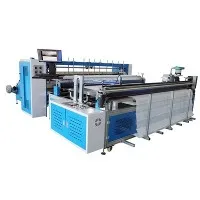
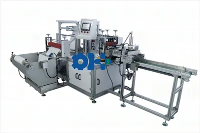
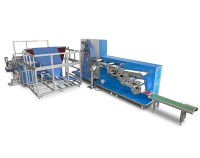
sheet roll is a kind of mechanical equipment specially used for efficient and automatic production of nonwoven coil. Its core purpose is to meet the large-scale, standardized production needs of disposable or reusable bed sheets in a wide range of areas, including healthcare, health, hospitality, and home. Details of its specific uses are given below:
1.Medical field: ensuring health and safety
Hospitals and clinics
Production of disposable medical sheets roll, for operating table, examination beds, bed, etc., to prevent cross infection.
The material must meet medical standards (e.g., non-toxic, non-fluorescent, anti-static), and some models support the addition of antimicrobial coatings or composite waterproofing (e.g., polyethylene) to improve protection.
Typical application: operating room sheets, isolation ward sheets, ambulance sheets, etc.
Nursing homes and nursing institutions
Mass production reusable or easy-to-clean sheet rolls to reduce long-term care costs.
Equipment can be customised to the width of a nursing beds in different sizes (e.g. 1.2-2.4m).
2.Hygiene: meet daily cleaning needs
Hotels and tourism
Efficient production of hotel disposable sheet rolls to improve room replacement efficiency (e.g. dozens of meters of sheets per minute).
Support multi-color printing or embossing technology to improve the aesthetic quality of products to meet the needs of high-end hotel brands.
Family and personal care
Make portable and hygienic disposable sheet rolls for travel, camping or makeshift bedding.
Some models can produce ultra-soft non-woven fabrics to improve comfort and fit people with sensitive skin.
3. Industry and special circumstances: adapting to different needs
Beauty and spa industry
Production of waterproof, oil-proof, non-woven sheet rolls for massage and beauty beds to prevent liquid infiltration and facilitate cleaning.
Spices or natural fibres such as bamboo can be added to improve user experience.
Pet care
Production of pet disposable sheet rolls for use in pet cages and pet hospital checklists to reduce odor and bacterial growth.
The device adjusts weight (say, 30-150g/m2) to suit different pet sizes.
Emergency and disaster relief
A batch of temporary paper for disaster relief resettlement sites and field hospitals will be produced promptly to ensure basic sanitation conditions for the affected people.
Modular design models can be rapidly deployed to the field to support round-the-clock operations.
IV. INTRODUCTION Environmental protection and sustainability: promoting green production
Application degradable materials
Support the use of environmental protection materials such as polylactic acid and wood pulp non-woven cloth to produce biodegradable rolls and reduce plastic pollution.
Some models are equipped with recycling system, in which waste is shredded and re-granulated to achieve material recycling.
Energy efficient design
Reduce energy consumption energy consumption% 20% -30% traditional models) by using variable frequency motors and servo control systems.
Optimize heating modules (e.g. infrared heating), shorten preheating time and reduce heat loss.
V. Customized production: meeting individual needs.
Width and gram weight adjustment
The device can produce rolls of paper between 0.5m and 3m wide, suitable for different occasions (such as cribs, large examination beds, etc.).
Control product weight (30-200g/m2) to achieve a balance of strength and softness by adjusting the pressure or spray volume of the hot rolled drum.
Functional composites
Integrated ultrasonic welding technology, instead of traditional sewing process, production of seamless sheet rolls, improve waterproofing performance.
Support for multilayer composites (such as non-woven fabrics + polyethylene films + absorbent cotton) and development of multifunctional sheets (such as incontinence care mats).
VI. INTRODUCTION Economic efficiency: increasing productivity and competitiveness
Automation
From the loading of raw materials to the winding of finished products, the process is automated to reduce manual intervention (there are only 1-2 operators per shift).
High-speed models can reach speeds of up to 200 metres perminute and have a daily production capacity of more than 10 tonnes, meeting large-scale orders.
Cost optimization
Raw material utilization ≤ ≤ 5%, reduce unit consumption costs.
Equipment service life of more than 10 years, long-term operation stability, low maintenance costs.
Aug 15, 2025
What Is The Use Of Nonwoven Bed Sheet Roll Making Machine
Send Inquiry
Product Categories
Latest Products